
Peugeot 208 Rear Springs: Specs, Fitment & Common Faults
A part that fails quietly, then suddenly — sagging gradually before a sudden, audible failure.
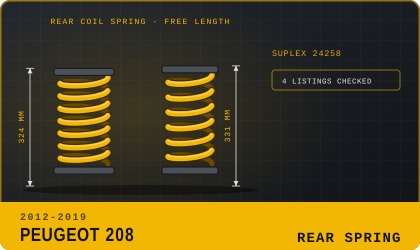 Illustration for editorial purposes
Opens live listings in a new tab.
OEM Part Number: confirm via VIN
Aftermarket coils: Suplex 24258 / Ashika ZCA7096A
| Rear coil springs (aftermarket) | Suplex 24258 (324 mm); Ashika ZCA7096A (331 mm); Japko ZCJ7096A (331 mm); KYB K-Flex RA7096 (331 mm) |
|---|---|
| Genuine (OE) numbers quoted | None quoted in the catalogue listings — the genuine spring varies by engine, suspension type and body style, so order it against your VIN |
| Standard rate | Confirm your exact generation and side, since PSA Group used multiple distinct rear spring references across most model generations |
| Estate/higher-load body style, where applicable | a stiffer rear spring rate than the equivalent standard body style, to handle the increased load-carrying capacity |
The Peugeot 208's rear springs should always go in as a pair — fitting one new spring alongside an old, sagged one on the opposite side leaves the car sitting unevenly and biases how it handles.
Corrosion, fatigue and broken coils on the 208
On the Peugeot 208, rear spring sag tends to creep in gradually over months, with little more than a slightly lower ride height to show for it, before ending suddenly at the coil's end with an audible clunk — worth remembering if one rear corner starts sitting noticeably lower than the other.

The job of each coil
On the Peugeot 208, supporting the rear end's weight and absorbing the first impact of a bump is the rear coil spring's job, working alongside the shock absorber rather than doing its job for it. A sagged or broken spring drops ride height, can throw off headlight aim, and in serious cases fails an MOT outright.
Opens live listings in a new tab.
What to look for on the 208, and whether to fit coils yourself
These are the same regardless of make or model — see our full Rear Springs Guide for symptoms of a failing spring, confirming fitment against your VIN, and OEM vs aftermarket guidance.
The same part on other modelsThe same part, covered across other Peugeot models.