
Peugeot 508 Rear Shock Absorber: Specs, Fitment & Common Faults
Worth knowing: Hybrid4 versions use a confirmed, specifically-labelled rear shock reference distinct from standard petrol/diesel variants.
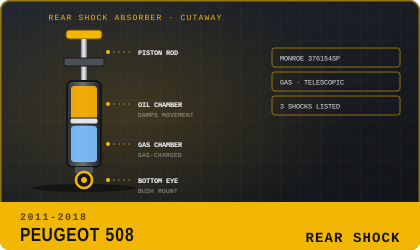 Illustration for editorial purposes
Opens live listings in a new tab.
OEM Part Number: confirm via VIN
Aftermarket rear dampers: Monroe 376154SP / Maxgear 11-1116
| Rear shock absorbers (aftermarket) | Monroe 376154SP (gas); Maxgear 11-1116 (gas, telescopic); Ridex 854S20204 (gas) |
|---|---|
| Genuine (OE) numbers quoted | None quoted in the catalogue listings — the genuine damper varies by engine, suspension type and body style, so order it against your VIN |
| Standard petrol/diesel, right | a different part number from the left-side shock, and from the Hybrid4 version below — confirm side and powertrain before ordering |
| Standard petrol/diesel, left | A different reference from the right-side shock above |
| Hybrid4, right/left | Confirmed by parts suppliers as a different, specifically-labelled reference from standard petrol/diesel versions, reflecting the rear-mounted electric motor's effect on weight distribution |
On the Peugeot 508, it's generally worth fitting shock absorbers in pairs rather than one at a time, even if just one side shows obvious signs of failure.
The Hybrid4 version and its own rear damper
Worth knowing: parts suppliers confirm Hybrid4 variants use a rear shock absorber labelled and referenced separately from standard petrol/diesel versions, reflecting the rear-mounted electric motor's effect on weight distribution. Some current-generation models also use a more complex rear damper coupling mechanism sold as a complete set rather than a simple serviceable shock — worth checking whether your car uses this more expensive, integrated system before assuming a straightforward like-for-like replacement.
How damper wear at the back of the 508 creeps up
It's easy to focus entirely on the Peugeot 508's front suspension, since it also does the steering, but the rear shocks age just the same — often with subtler symptoms that get dismissed as road noise right up until they can't be ignored.

How the 508 keeps its back wheels planted
The rear shock absorber controls how quickly the rear suspension compresses and rebounds over bumps, working independently of the coil spring on most versions. A worn rear shock lets the back of the car bounce excessively after a bump instead of settling quickly.
Opens live listings in a new tab.
These are the same regardless of make or model — see our full Rear Shock Absorber Guide for symptoms of a worn shock, confirming fitment against your VIN, and OEM vs aftermarket guidance.
The same part on other modelsThe same part, covered across other Peugeot models.