
Renault Clio Radiator: Specs, Fitment & Common Faults
On the Clio, a genuinely well-corroborated diagnosis: "95% chance it's the thermostat housing" — a cheap, common fix worth knowing.
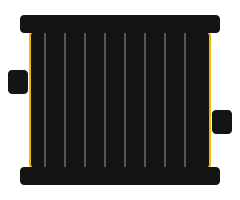 Illustration for editorial purposes
Opens live listings in a new tab.
Renault Clio Radiator: OEM Part Number
| Manual gearbox, all engines | Standard radiator with no transmission cooling circuit |
|---|---|
| Automatic/EDC dual-clutch, all engines | A genuinely separate water-oil heat exchanger cools the transmission fluid, distinct from both the radiator itself and the separate engine oil cooler also present on many of these engines — confirmed as three distinct cooling components working together, not one radiator doing all the jobs |
A Genuinely Well-Corroborated Diagnosis Worth Knowing: The Thermostat Housing — Renault Clio Radiator
If your Clio has the 0.9 or 1.2 TCe engine and you're chasing a slow coolant leak, this is genuinely worth knowing directly: one owner's own assessment after extensive research put it plainly — "95% chance it is thermostat housing." This is a well-documented, common failure point on these engines, and genuinely good news on cost: one documented repair came to around £85-100, a considerably cheaper fix than the anxiety of an unexplained coolant leak might suggest.
It's also genuinely worth knowing you're not imagining a problem if this feels like a common complaint: multiple owners and independent motoring columns have confirmed that this generation of small turbocharged engines leaks coolant in significant numbers, and if a dealer is dismissive of a genuine, repeated coolant loss without a proper investigation, it's worth pushing back rather than accepting a simple "topped up, no fault found" response, particularly if you're being diligent about flagging it before it becomes a genuine overheating risk.
Renault Clio Radiator: The Part That Keeps Everything Else From Cooking
Few parts get less attention than this one, but on the Renault Clio, a neglected cooling system is behind the vast majority of avoidable serious engine failures. Noticing the early warning signs costs nothing and can save a genuinely large repair bill down the line.

Renault Clio Radiator: What It Does
On the Renault Clio, coolant runs through the radiator to shed engine heat into the airflow, keeping temperatures in check. On many automatics, a separate internal circuit inside the same unit also cools the transmission fluid — one more reason a mismatched part number causes more than just a cooling problem.
Opens live listings in a new tab.
Renault Clio Radiator: Faults, DIY Difficulty & Aftermarket Advice
These are the same regardless of make or model — see our full Radiator Guide for the three common failure modes, confirming fitment against your VIN, and OEM vs aftermarket guidance.
More Renault Radiator
The same part, covered across other Renault models.