
Suzuki Celerio Brake Discs: Specs, Fitment & Wear Symptoms
A genuinely useful habit worth building: Suzuki has issued confirmed safety recalls relating to braking systems across its small car range — worth checking your specific VIN.
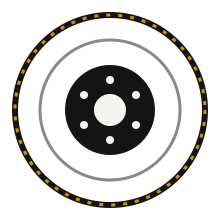 Illustration for editorial purposes
Opens live listings in a new tab.
OEM Part Number: 55311-84M00 (genuine front disc — confirm via VIN) — aftermarket front discs Ridex 82B2425
| Front brake discs (aftermarket) | febi 108628 (231 x 20 mm, vented, 4 holes, coated, min 18 mm); SWAG 33 10 5440 (231 x 20 mm, vented, 4 holes, coated, min 18 mm); Blue Print ADK84348 (231 x 20 mm, vented, 4 holes, coated, min 18 mm); Ridex 82B2425 (231 x 20 mm, vented, 4 holes, uncoated); Ridex 82B0313 (231 x 17 mm, vented, 4 holes, uncoated). |
|---|---|
| Disc sizes & variants | the Celerio front disc is 231 mm vented, 4-stud. Most references are 20 mm thick; one Ridex reference is listed at 17 mm, so check the thickness of the existing disc. |
| Genuine (OE) numbers quoted | 55311-84M00 (genuine front disc number for this model — confirm via VIN, as several disc sizes exist) |
| Fitment notes | Minimum thickness 18 mm on the 20 mm discs. No Brembo, Bosch, TRW, ATE or Ferodo reference is listed in the correct 231 mm 4-hole size; the febi, SWAG and Blue Print references are the branded options. |
Suzuki Celerio Brake Discs: The Part That Pads Depend On
On the Suzuki Celerio, these two components wear together, and letting one go too long accelerates wear on the other, which is why a simple pad swap so often reveals discs that need replacing at the same time.
Suzuki Celerio Brake Discs: Watch: Replacing It
No Celerio disc video at all; yOypGOF2muI is Celerio pads only. Swift is a different platform, general Suzuki layout only.

Suzuki Celerio Brake Discs: What They Do
Brake discs provide the surface the brake pads clamp against to slow the car, converting momentum into heat through friction. Larger, sportier trims of the Celerio typically use bigger discs than standard versions to handle the additional heat generated by more aggressive braking.
Opens live listings in a new tab.
A Genuinely Useful Habit Worth Building: Checking for Open Recalls — Suzuki Celerio Brake Discs
Suzuki has issued confirmed safety recalls across its small car range relating to braking systems, including one covering over 20,000 Swift, Baleno, S-Cross and Vitara models built between 2016 and 2022 for a valve between the engine and brake booster that can swell, increasing the pedal effort needed to stop. It's genuinely worth checking your specific VIN against Suzuki's official recall register directly, particularly on a used car where you can't be certain a previous owner had any relevant recall work completed.
It's also worth knowing that some Suzuki models with strongly front-biased brake balance see their rear discs corrode faster than the fronts simply because the rear brakes see less genuine use in everyday driving — worth bearing in mind if you notice an apparent asymmetry between the front and rear discs.
Suzuki Celerio Brake Discs: Wear Symptoms, DIY Difficulty & Aftermarket Advice
These are the same regardless of make or model — see our full Brake Discs Guide for warning signs to watch for, confirming fitment against your VIN, and choosing a reliable aftermarket disc.
More Suzuki Brake Discs
The same part, covered across other Suzuki models.