
Toyota Corolla Front Bumper: Fitment, Sensors & Common Damage
A genuinely important technical fact: sensors are wired in series, meaning one faulty link disables the whole system — plus a real, distinctive grievance where a routine car wash triggered a malfunction warning.
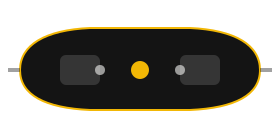 Illustration for editorial purposes
Opens live listings in a new tab.
A Genuinely Important Technical Fact Worth Knowing First
If the entire parking sensor system has stopped working rather than just one sensor, this is genuinely worth knowing: parking sensors on many Toyota models are wired in series, meaning a single faulty sensor or damaged section of wire can disable the whole system rather than just the affected sensor. If you're chasing a total system failure, it's worth methodically checking each sensor and connector individually rather than assuming all of them have failed simultaneously — one bad link is often the genuine, complete explanation.
It's also worth knowing that even a correct, genuine replacement sensor fitted after damage typically needs proper calibration through dealer-level diagnostic equipment before it will work correctly — simply plugging in a new sensor isn't always enough, since the system needs to register the new sensor's identity. If you've fitted a replacement yourself and it's still showing a fault or firing false positives, this calibration step is worth asking about specifically before assuming the new part itself is faulty.
Toyota Corolla Front Bumper: More Than Just a Plastic Panel
The Toyota Corolla's front bumper typically carries more than styling — parking sensors, adaptive cruise radar, and fog light housings are all commonly built in, so even a minor impact can mean more than a simple panel swap.
Toyota Corolla Front Bumper: OEM Part Number
This is one of the more variation-heavy parts on the Corolla specifically because of how many trim-specific styling packages Toyota offers — Nightshade, Apex, and FX trims all use visually distinct bumper covers even within the same body style, separate from the more basic hybrid vs non-hybrid and fog-light-equipped distinctions that affect most other parts on this car. A parts specialist working from your VIN is genuinely the most reliable way to get this one right first time.
Toyota Corolla Front Bumper: What It Does
Beyond absorbing minor impacts, the front bumper on higher trims of the Corolla often houses parking sensors, the radar sensor used for adaptive cruise control, and fog lights. A bumper that looks compatible can still be missing the correct cutouts or mounting provisions for your specific trim's equipment.
Toyota Corolla Front Bumper: Generations, Derivatives & Colour
| E210 (2019–present), standard trims | Colour-coded to body — common shades included Pure White, Eclipse Black, Tyrol Silver, Tokyo Red |
|---|---|
| E210 facelift (2023–present), standard trims | Colour-coded to body — introduced Juniper Blue and Decuma Grey as key shades |
| E210 facelift GR Sport | Ash Grey and Pure White with a contrast black roof, pillars and rear spoiler are exclusive to this trim; different front bumper design with larger lower intake than standard trim |
Match your paint colour by shade name (not just "white" or "grey" generically) when buying a used colour-coded bumper — Toyota has offered several distinct whites, silvers and greys across generations that don't match each other, and the GR Sport's bi-tone finish (body colour plus black roof) is a genuinely different specification from a single-colour standard bumper.
Watch: Removing the Front Bumper
This covers the current E210 generation. GR Sport's additional lower intake trim differs slightly — cross-check against your exact trim before starting.
Opens live listings in a new tab.
Toyota Corolla Front Bumper: Common Damage, DIY Difficulty & Aftermarket Advice
These are the same regardless of make or model — see our full Front Bumper Guide for common damage types to check for, confirming fitment against your VIN, and the sensor-calibration risk with cheap aftermarket covers.
More Toyota Front Bumper
The same part, covered across other Toyota models.